Every contractor marketing guide I read to write this one does the same thing. It lists nine channels, tells you to "be consistent on social media," and ends with a contact form. You finish it feeling informed and slightly more tired, like a man who just read the entire manual for a microwave he only uses to reheat coffee.
This one ranks the channels in the order I'd actually set them up for a $500K+ company with crews. Then it follows the money past the click, all the way to a signed contract, which is the one number nobody else's guide gets to.
On this page:
- Every channel, ranked
- What digital marketing for contractors means
- The best marketing strategies for contractors, in order
- Emergency trades vs planned projects
- Online marketing for contractors: measure jobs, not clicks
- Reviews and AI search
- Content marketing for contractors
- What to spend
- What we see in the field
- Common questions
Every Digital Marketing Channel for Contractors, Ranked
Here's the whole field on one screen. "When it starts" is the typical range we see on the accounts we run, not a promise.
| Channel | What it does | When it starts | Best for |
|---|---|---|---|
| Fast response and follow-up | Turns inquiries into booked appointments | Day one | Every contractor, first |
| Google Business Profile and reviews | Gets you picked when a homeowner compares | Weeks | Every contractor |
| Website and landing pages | Turns a visit into a call or a form | Weeks | Every contractor |
| Google search ads | Catches people already searching | Days | Big markets and urgent trades |
| Local Services Ads | Pay-per-lead listing at the very top of Google | Days to weeks | Strong reviews and a phone answered live |
| Facebook and Instagram ads | Reaches homeowners before they start searching | Days | Planned projects: decks, fences, patios, siding |
| SEO | Free search traffic that compounds | 6 to 12 months | Companies that can wait for it |
| AI search visibility | Gets you recommended in ChatGPT and AI answers | Months | Anyone with reviews and real proof |
| Video and content | Builds trust before the visit | Weeks, then compounds | Owners willing to be on camera |
| Past customers and referrals | Repeat work and introductions | Weeks | Anyone with a customer list |
What Is Digital Marketing for Contractors?
Digital marketing for contractors is everything online that moves a homeowner from "we should really do something about the back yard" to a signed contract with you. It covers two jobs: getting found and trusted, then getting contacted and booked.
Most owners picture only the first job: a website and maybe an ad. Then there's the company Facebook page whose last post is a 2019 photo of a deck, three likes, one of them from your mom.
The part that actually decides your revenue sits further down. Somebody has to answer when the homeowner reaches out, get them booked, and show up with a price at the kitchen table. Marketing that stops at the click is a very expensive way to make your phone buzz while you're on a ladder.
The Best Marketing Strategies for Contractors, in the Order That Works
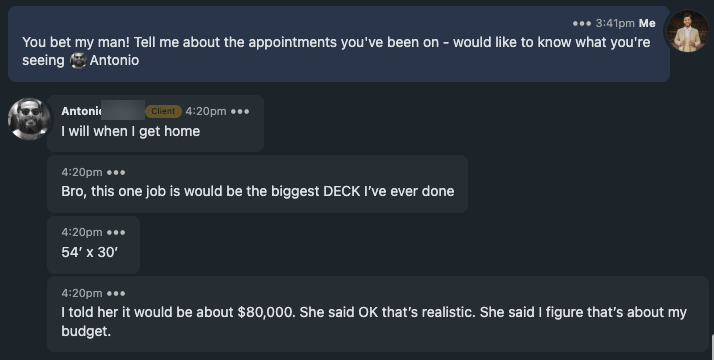
The best marketing strategy for a contractor is to fix the leaks before buying more water. Speed and tracking first, trust second, then paid attention, then the channels that compound. Here's the order I'd set it up in, and why each step comes before the next.
- Answer fast, and track every job to its source. Everything after this is wasted if an inquiry waits until tomorrow. Tracking tells you which dollars produced signed work, so you stop paying for the ones that didn't.
- Fix your Google Business Profile and reviews. This is where homeowners compare you. It's cheap, and it makes every other channel convert better.
- Make the website book. One clear offer, a phone number that works on a phone, and a form short enough to fill in at a red light (not that anyone should).
- Buy attention. Search ads catch people already looking. Social ads reach the much bigger group who haven't started yet. More on which goes first below.
- Build the compounding channels. SEO, AI search and video. Slow to start, cheaper every month after.
- Work the people who already know you. Past customers and their neighbors. The cheapest job you'll ever sign is from someone who already has your crew's phone number.
Step one is where most contractor marketing quietly dies, so it gets the numbers. In the Lead Response Management Study run with MIT, calling a lead at 30 minutes instead of 5 made contact 100 times less likely. The study is from 2007, which makes it older than most of your trucks, and nothing about homeowners has gotten more patient since.
| What happens | Number | Source |
|---|---|---|
| Callers to home-services businesses who reach a person | 52% | Invoca, 2026 |
| Drop in contact odds calling at 10 minutes instead of 5 | 5 times lower | InsideSales and MIT, 2007 |
| Drop in contact odds calling at 30 minutes instead of 5 | 100 times lower | InsideSales and MIT, 2007 |
| Answered home-services calls that are real leads, and the share of those that convert on the call | 38%, then 45% | Invoca, 2026 |
Read that first row again. Almost half the people who call a home-services business get a voicemail, a busy signal or a hold song, and then they call the next company on the list. You paid for that call. Somebody else is building the deck.
Digital Marketing for Home Services: Emergency Trades vs Planned Projects
Digital marketing for home services splits into two different businesses. Emergency trades sell to someone with a problem today. Planned-project trades sell to someone who has wanted the thing for months and hasn't started shopping. The right first channel is different for each.
| Emergency trades | Planned projects | |
|---|---|---|
| Examples | Burst pipe, dead furnace, storm leak | Decks, fences, patio covers, siding, windows, roof replacement |
| How the homeowner starts | Searches today, calls the first good answer | Thinks about it for months, then gets quotes |
| What wins | Showing up first and answering the phone | Being trusted before the quote is compared |
| Best first channel | Search ads, Local Services Ads, the map listing | Social ads that reach people before they search |
A furnace dies and the homeowner is on Google before their coffee's done. A deck doesn't die. A family talks about a deck for three summers, buys a grill "for when we get the deck," and keeps talking.
That's why search alone runs out fast for planned projects: only a small slice of your future customers are searching this month. If you sell big planned jobs, the bigger opportunity is reaching the rest before they open five tabs of quotes. That's the whole idea behind home services marketing built for planned projects.
Online Marketing for Contractors: Measure Jobs, Not Clicks
Online marketing for contractors should be judged on one number: what you paid for each signed job. Clicks, impressions and even leads are steps on the way. Each step loses people, and the losses are where the money goes.
Clicks are the participation trophy of marketing. They always go up and look great in a report. You still can't pay a crew with them.
| Step | What to ask | Where it usually leaks |
|---|---|---|
| Click or view | Is the right homeowner seeing this? | DIYers, job seekers, people outside your area |
| Inquiry | Did they call or fill in the form? | A slow site, a vague offer, a long form |
| Appointment booked | Did someone reach them and book a time? | Slow callbacks and missed calls |
| Appointment held | Did you actually sit down with them? | No reminders, booked too far out |
| Price presented | Did they hear your number at the table? | "I'll email you a quote" |
| Signed job | What did this one cost you to win? | Nobody tracks it back to the source |
That second-to-last row costs contractors more than any ad account ever has. If the homeowner sat down with you and left without hearing a price, the appointment didn't fail. The presentation never happened. Emailing a quote afterwards hands the decision to the cheapest bid in their inbox.
Every report you get, from an agency or from yourself, should go all the way down this chain. If it stops at clicks or leads, it's measuring the part that's easiest to make look good. A contractor marketing agency worth hiring reports signed jobs and what each one cost.
Reviews and AI Search: The New Word of Mouth
Reviews are now the deciding step for most homeowners, and AI tools have become a real source of contractor recommendations. Both run on the same thing: proof that other people hired you and were glad they did.
The numbers from BrightLocal's 2026 Local Consumer Review Survey are blunt. The last row is bad news for the company with 9 reviews and a very loyal aunt.
| Consumers who... | 2026 |
|---|---|
| Read reviews for local businesses | 97% |
| Use AI tools for local business recommendations | 45%, up from 6% |
| Only use a business rated 4 stars or higher | 68%, up from 55% |
| Won't use a business with fewer than 20 reviews | 47% |
Source: BrightLocal Local Consumer Review Survey 2026, 1,002 US adults.
Word of mouth still leads. In a 2025 homeowner survey from Roofing Contractor, 79% of homeowners looked for a roofer through word of mouth and 62% through internet search. Most do both. They hear your name at a barbecue, then look you up in the car on the way home.
The AI shift is the fastest change I've seen in this business. BrightLocal found 45% of consumers now use AI tools for local business recommendations, up from 6% the year before.
I think it's the closest thing you'll ever get to another kind of referral. The tools read your reviews, your site and what other sites say about you. There's a full playbook on getting ChatGPT to recommend your contracting business.
Content Marketing for Contractors: Put the Owner on Camera
Derek L., an outdoor living contractor in Tennessee, 30 days in: 37 appointments and $46,000 signed on $1,295 of ad spend.
The content that works for contractors is video of the owner explaining the work: the process, what a project at that size costs, and the mistakes that turn into horror stories. A homeowner who has watched you explain your process for ten minutes walks into the appointment already trusting you.
That's the difference between content and posting. Posting is the 2019 deck photo (still three likes, your mom has not budged). Content answers the question a homeowner was too embarrassed to ask a salesperson.
You don't need a film crew. Our clients record themselves from scripts we write. As our homepage puts it: "One two-hour shoot every 2 to 4 weeks becomes 90 pieces of ad creative." Derek was 21 when he started, and his age was a problem until homeowners saw him explain the work. More on that in how a young contractor earns credibility.
How Much Should a Home Service Business Spend on Marketing?
Work backward from a signed job, not forward from a percent of revenue. Decide what you can afford to pay to win a $30,000 job, then judge every channel on whether it gets there. A channel that costs more per lead can still be the cheapest per signed job.
Three real examples from our clients. Notice that none of them is measured in clicks.
| Contractor | Ad spend | What it produced |
|---|---|---|
| Derek L., outdoor living, TN | $1,295 | 37 appointments and $46,000 signed in 30 days |
| Mike H., decks, MN | About $1,500 | $45,000 closed in 2 weeks |
| Ricardo C., concrete and decks, CO | Under $1,000 | $180,000 in new bids out |
Your number will be different, because your market, your trade and your close rate are different. The full breakdown is in how much contractors should spend on ads, and the metric that ties it together is cost per appointment.
What We See in the Field
Here's what shows up across the contractors we work with, in their own words and numbers. First name and last initial only, because we never publish a client's business name.
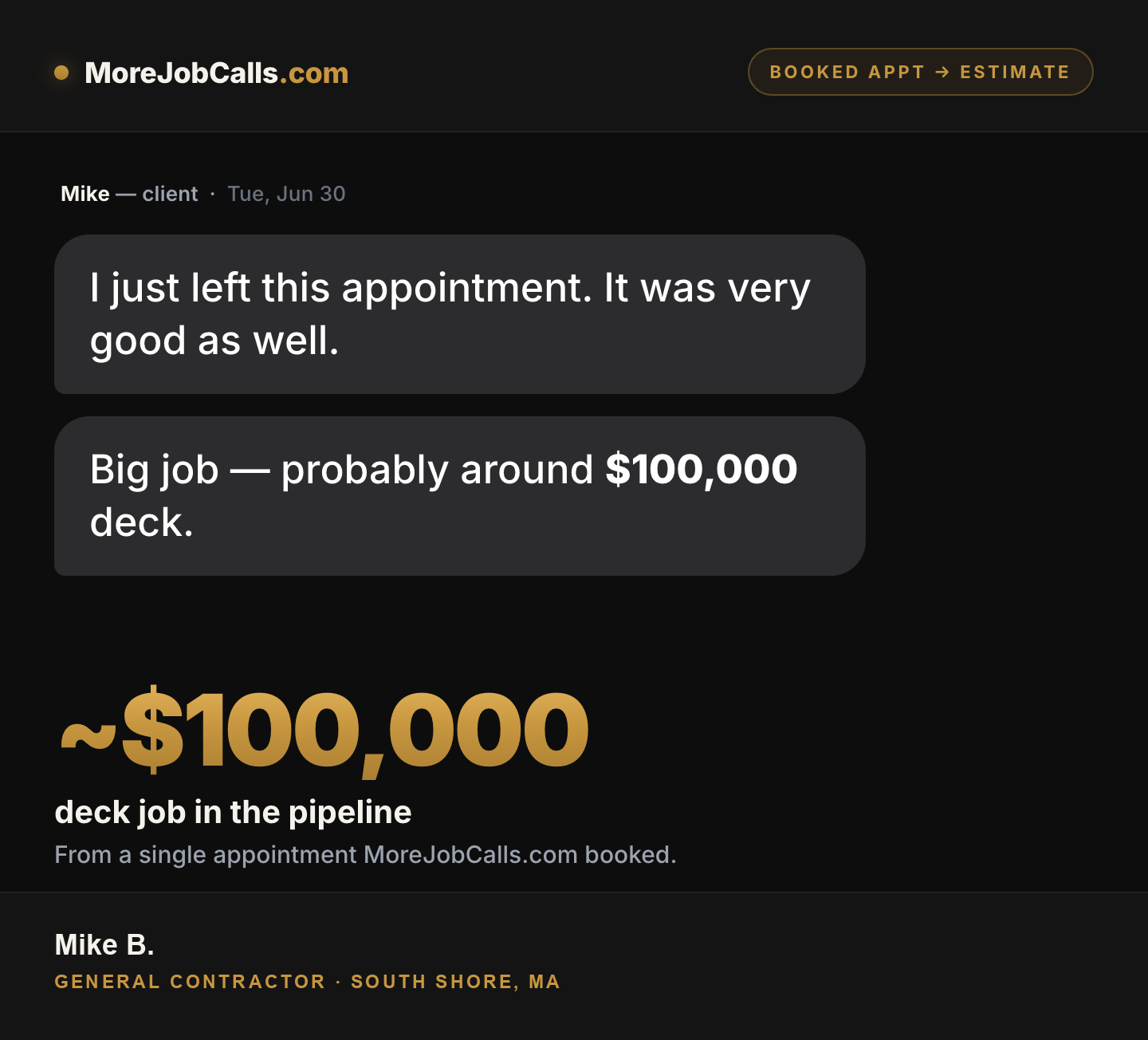
- Calendars can fill faster than crews. Mike B. went from 3 appointments a week to between 3 and 11 a day, and was booked out close to 6 months.
- Small markets aren't dead markets. Josiah W. was told flat out not to run ads in a market of about 90,000 people in Montana. He got 40 to 50 leads a month. His story is here.
- Cost per lead can fall off a cliff. Justin W. went from $400+ per lead to about $30, and from 15 leads a month to 30 a week, inside 14 days.
- One good month changes the year. Jacob W., a deck builder in Pennsylvania, closed $480,000 in 21 days and passed his first $1M+ year by April 21.
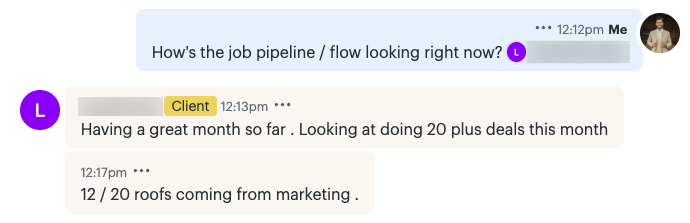
- It isn't only decks. One roofing client told us 12 of their 20 roofs that month came from marketing, by the 19th.
Common Questions
What is the best marketing strategy for contractors?
The best strategy is an order, not a single channel. First, answer every inquiry within minutes and track where each job came from.
Second, fix your Google Business Profile and reviews. Third, make sure your website turns visits into calls. Then buy attention with ads, and build the slow channels behind them.
How much should a contractor spend on digital marketing?
Work backward from what a signed job is worth and what you can afford to pay to win one, rather than picking a percent of revenue. Track ad spend against signed jobs, not clicks.
Is SEO or paid ads better for contractors?
They do different jobs. Paid ads can produce appointments within days.
SEO usually takes 6 to 12 months, then keeps producing without paying per click. Most contractors who need appointments this season start with ads and build SEO behind them. More in SEO for contractors.
Are Google Local Services Ads worth it for contractors?
They can be, if you have strong reviews and someone answers the phone live during the day. Local Services Ads charge per lead. A 2026 WebFX test found them on 28.4% of home-services searches, rising to 49% when the search included a city name.
How do contractors get leads without Angi or HomeAdvisor?
Run your own channels so the homeowner contacts only you: your ads, website, Business Profile and past customers. Shared-lead sites sell the same homeowner to several contractors and turns the job into a race to the lowest price. See exclusive contractor leads.
Does AI search matter for contractor marketing?
Yes, and fast. BrightLocal's 2026 survey found 45% of consumers now use AI tools for local business recommendations, up from 6% the year before. AI answers draw on your reviews and your website, so the proof that wins homeowners also gets you recommended.
Where to Start

If your calendar has room in it this season, start with the steps that turn attention into appointments: fast follow-up, tracking, and an offer homeowners trust. That's what we build in our contractor marketing system, inside your own accounts. If you'd rather start with the long game, our contractor SEO service builds the compounding side.
Either way, retire the 2019 deck photo. Your mom will understand.