Window buyers walk into the appointment braced. Decades of "buy two, get two free" and tonight-only pricing taught homeowners that a window salesman is someone to survive, like a dentist with a commission.
So the marketing job for a window and door company isn't just "get more leads." It's to be the company the homeowner already trusts by the time three quotes land on the kitchen table. They will put those quotes in a spreadsheet. Some of them will color-code it.
On this page:
- How homeowners research window companies
- Why window marketing is harder than it looks
- The channels, in the order that works
- Beating the one-legger
- Measure installed jobs, not leads
- What we see in the field
- Common questions
How Homeowners Research Window and Door Companies
Window buyers check several sources before they call anyone. In a 2026 This Old House survey of 1,000 homeowners who replaced windows, search engines led at 49%, and AI tools already showed up for 27%.
| Where window buyers researched | Share | What it means for your marketing |
|---|---|---|
| Search engines | 49% | Show up in the map listing, ads and search results |
| Family, friends and neighbors | 44% | Past customers are a channel, so work them |
| Company websites | 44% | Your site gets compared side by side with two others |
| Review sites | 35% | Review count and recency decide who gets the call |
| AI tools | 27% | ChatGPT and AI answers already recommend companies |
Source: This Old House window replacement survey, 2026, 1,000 US homeowners.
The same survey found nearly 8 in 10 buyers got two or three quotes, and price was the top buying factor at 32%. Many spent one to four weeks researching first. That's a month of a homeowner reading about you before you ever see their front door.
Why Window and Door Marketing Is Harder Than It Looks
Window marketing is harder than most trades for three reasons: the industry's pressure-sales reputation, buyers who compare bids on price, and leads sold to several companies at once. Each one pushes the job toward whoever discounts hardest.
The reputation problem is the one nobody can fix with a bigger budget. A homeowner who has heard one bad window-sales story treats every company like it might be that one. Your ads, your reviews and your first phone call all have to say "we're not that company" before your rep says a word.
Shared-lead sites make it worse. They sell the same homeowner to several companies, the phone rings six times in an hour, and the homeowner stops answering anybody. Jeff H., a window and deck contractor in Michigan, described the vendor side of that world: "I've had six, seven, eight companies. Everybody promises the world."
Window and Door Contractor Marketing Channels, in the Order That Works
The order matters more than the list. Fix how fast you answer first, then build trust, then buy attention, then build the channels that compound. Here's the order I'd set it up in for a window and door company with crews.
- Answer fast. In the Lead Response Management Study run with MIT, calling at 30 minutes instead of 5 made contact 100 times less likely. The study is from 2007, which in window years is about three "limited-time" sales ago.
- Build your reviews and Google Business Profile. 68% of consumers will only use a business rated 4 stars or higher, per BrightLocal's 2026 survey.
- Make the website answer the scary questions. What it costs, how long install takes, and what happens if something goes wrong. The site that answers those gets the call.
- Buy attention. Search ads catch homeowners already shopping. Social ads reach the much bigger group with drafty windows who haven't started looking.
- Build SEO and AI visibility. Slow to start, cheaper every month after.
- Work past customers. In the same This Old House survey, 91% of window buyers said they'd recommend their company. Most companies never ask them to.
Doors usually ride along with windows. A homeowner replacing seven windows is staring at a tired entry door and a patio door that sticks every August. Show doors in your ads and on your site, and the add-on gets mentioned before your rep has to bring it up.
| What happens to calls | Number | Source |
|---|---|---|
| Callers to home-services businesses who reach a person | 52% | Invoca, 2026 |
| Drop in contact odds calling at 30 minutes instead of 5 | 100 times lower | InsideSales and MIT, 2007 |
| Consumers who won't use a business with fewer than 20 reviews | 47% | BrightLocal, 2026 |
Read the first row again. Almost half the people who call a home-services business never reach a human. In the window business, that caller dials the next company on their list, and the spreadsheet loses a row.
How to Beat the One-Legger Window Appointment
A one-legger is an appointment where only one decision maker is home. To prevent it, ask about every decision maker when you book, schedule a time they can both make, and confirm it again in the reminder.
One-leggers are expensive in a quiet way. The rep drives out, gives the full presentation, and leaves with "We need to talk it over." Then the missing decision maker reviews your price on a spreadsheet, next to two cheaper ones, with nobody there to explain what yours includes.
The fix starts in the marketing, not the sales meeting. Your booking form and your confirmation text should both ask who else is part of the decision. It feels pushy to ask. It's far less pushy than a second visit.
Then present the price at the table. Emailing a quote afterwards hands your number to the spreadsheet, and the spreadsheet only has one column it cares about. In the room, you can show what the price buys: the install, the warranty, the crew that shows up on time.
Measure Installed Jobs, Not Window Leads
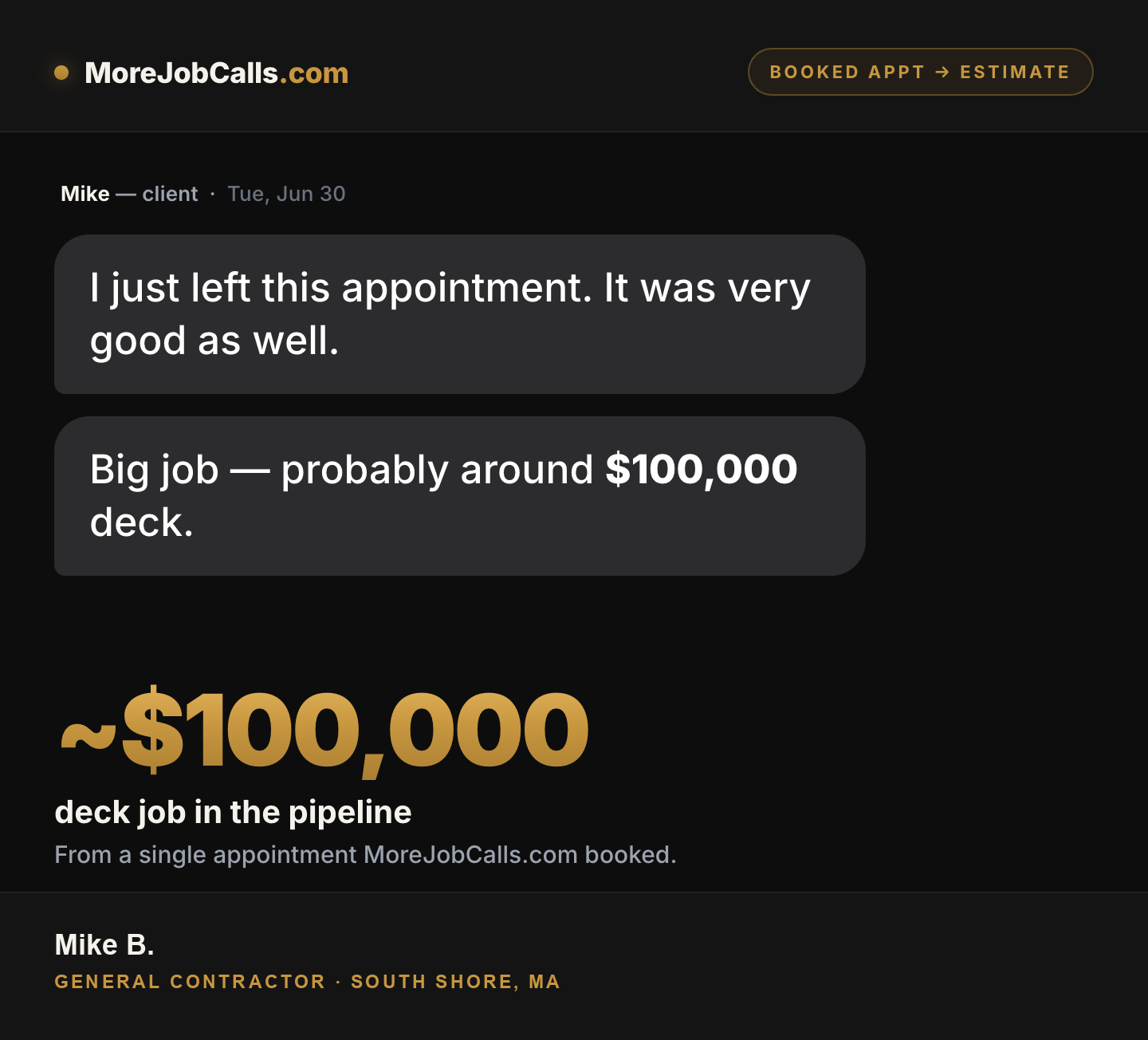
Billy S., a deck and patio builder in Greenville, SC: $196,383 in signed contracts in his first week, on the same appointment system we run for window companies.
Judge window and door marketing on one number: what you paid for each installed job. Leads are the first step. Every step after it loses people, and those losses are where the budget goes.
Ask any agency, or yourself, to report the whole chain: leads, appointments booked, appointments held with every decision maker, prices presented, and signed jobs. If the report stops at leads, it's measuring the part that's easiest to make look good. Clicks always go up. Crews still need installs.
Billy S. builds decks, not windows, but his numbers show the chain working. He signed $196,383 in his first week and had over $300,000 in contracts and deposits by day 17, on $1,657 of ad spend.
The trade changes. The chain doesn't.
What We See in the Field
Here's what shows up across the high-ticket contractors we work with. First name and last initial only, because we never publish a client's business name.
- Volume across trades. 228 sales appointments booked across 9 builders in the 30 days to Monday 19 October 2026.
- Estimates turn into installs. Brian W., a fence and deck builder in Bend, Oregon, sent about 60 estimates in about 6 weeks and closed about 25.
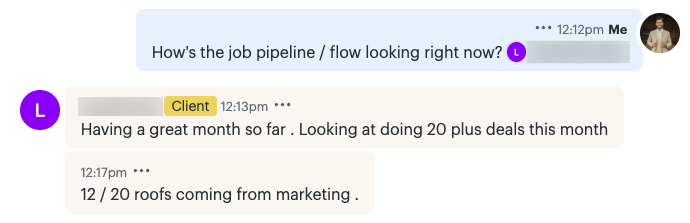
- Exterior trades beyond decks. David L., a roofing contractor in North Carolina, closed 17 roofing deals from January to March: $65,000 in profit on $12,000 of ad spend.
- Cost per lead can fall fast. Justin W., a deck and patio builder in San Antonio, went from $400+ per lead to about $30 inside 14 days.
Common Questions
What is the best marketing for window and door companies?
Marketing that earns trust before the quote. Homeowners research windows for weeks and usually get two or three quotes, so the company they already trust when they sit down usually wins.
Start with fast response and reviews, then your website, then ads, then SEO and past customers.
How do window companies get more leads?
Run your own channels so the homeowner contacts only you: your ads, website, Google Business Profile and past customers. Shared-lead sites sell the same homeowner to several window companies, and the job goes to whoever discounts hardest.
How do you stop one-legger window appointments?
Ask about every decision maker when the appointment is booked, and book a time when they can all be home. Confirm it again in the reminder. An appointment with one spouse missing is a quote the other spouse will compare without you in the room.
Do window companies need SEO or paid ads?
Both, in that order for most companies. Paid ads can produce appointments within days. SEO usually takes 6 to 12 months, then keeps producing without paying per click.
Search engines were the top research source in a 2026 This Old House survey of window buyers. More in digital marketing for contractors.
Should a window company email quotes after the appointment?
No. Present the price at the table, with every decision maker there. An emailed quote gets lined up against two other quotes, and price was the top buying factor in that same survey. In the room, you can explain what the price buys.
Where to Start

If your reps are driving to one-leggers and losing to cheaper quotes, start with the booking and follow-up side before you buy more leads. That's what we build for window companies: exclusive appointments, qualified and booked onto your calendar, inside your own accounts. See window replacement leads for how it works.
And whatever you do next, assume the homeowner has a spreadsheet. Be the row they already trust.