Every HVAC owner knows the July phone. It rings through dinner, through the weekend and through your kid's birthday party. Then April shows up and the phone gets so quiet you check whether it's still plugged in.
Most HVAC marketing is built for July. It makes you easy to find when the AC dies. That's worth doing, but it only catches the homeowner who's already sweating, and that homeowner hires whoever answers first.
On this page:
- Why HVAC marketing is different
- 1. Market the replacement, not just the repair
- 2. Answer every call in minutes
- 3. Win the map with reviews
- 4. Work your maintenance customers
- 5. Explain the replacement on video
- 6. Aim paid ads at planned replacements
- 7. Plan for the shoulder seasons
- 8. Qualify before you book
- 9. Measure cost per signed job
- Common questions
Why HVAC Marketing Is Different
An HVAC company is two businesses sharing one phone number. The service side sells speed. The replacement side sells a decision the family will live with for years, usually made at a kitchen table with both spouses there.
| Emergency service call | Planned replacement | |
|---|---|---|
| Who calls | A homeowner with no heat or no cooling, right now | A homeowner with an old system and rising bills |
| How they choose | Whoever answers and can come today | Trust, the explanation, the options, the financing |
| Who decides | Usually one person | Usually both spouses |
| Marketing that fits | Map listing, search ads, a phone that gets answered | Video, reviews, follow-up, ads that reach them before failure |
The replacement side has a built-in reason to care. Heating and cooling are the two biggest energy uses in a home: 52% of household energy use in 2020, according to the EIA. A homeowner with a tired system feels it on every bill, which means they can be reached long before the system dies.
1. Market the Replacement, Not Just the Repair
The homeowner who becomes a replacement job usually shows signs months ahead. Your marketing should speak to those signs, not only to the breakdown. ENERGY STAR gives you the line to build around: consider replacing when "your heat pump or air conditioner is more than 10 years old."
| Sign a homeowner is a replacement buyer | What your marketing says |
|---|---|
| Heat pump or AC past 10 years, furnace past 15 | "How old is your system?" Age is the easiest qualifier there is. |
| Repairs every season | When a repair stops making sense, and how to tell |
| Bills creeping up | ENERGY STAR says efficient units installed correctly "can save up to 20 percent on heating and cooling costs." |
| Rooms that never get comfortable | What a properly sized system changes |
Age guidance and savings figure: ENERGY STAR, "When to Replace".
None of this needs a sale price. It needs a clear explanation from someone who sounds like they've seen a thousand attics. That's you.
2. Answer Every Call in Minutes
This is the cheapest strategy on the list and the one most often skipped. A missed call in July is a job for the company down the street. A missed replacement inquiry in April is the biggest ticket of the month quietly walking away, and nobody notices because nothing broke.
| What happens | Number | Source |
|---|---|---|
| Callers to home-services businesses who reach a person | 52% | Invoca, 2026 |
| Drop in contact odds calling at 10 minutes instead of 5 | 5 times lower | InsideSales and MIT, 2007 |
| Drop in contact odds calling at 30 minutes instead of 5 | 100 times lower | InsideSales and MIT, 2007 |
Read the first row again. Almost half the people calling a home-services business never reach a person. The MIT study is old enough to have its own refrigerant phase-out, but homeowners haven't gotten more patient since.
3. Win the Map With Reviews
When the AC dies, the homeowner searches, looks at the map and calls one of the first few names. Your Google Business Profile and your reviews decide whether that name is yours. Reviews also carry the replacement buyer, who reads them slowly and more than once.
| Consumers who... | 2026 |
|---|---|
| Only care about reviews written in the last three months | 74% |
| Won't use a business with fewer than 20 reviews | 47% |
| Expect business owners to respond to reviews | 89% |
Source: BrightLocal Local Consumer Review Survey 2026.
HVAC has an advantage most trades don't: your techs are in homes every day. Ask at the end of every visit that went well, and send the review link by text that evening. The full map playbook is in local SEO for contractors.
4. Work Your Maintenance Customers
Your maintenance list is the warmest replacement audience you'll ever have. These homeowners already let you into the house, and your techs already know how old the equipment is. Most companies treat the tune-up as the product, when it's really the best replacement lead source they own.
- Log the equipment age on every visit. A spreadsheet of "system age by customer" is a replacement pipeline sitting in plain sight.
- Have the tech flag replacement candidates. Not a sales pitch on the spot, just a note that the system is past its useful life.
- Book a separate replacement consultation. A comfort advisor runs it, with both decision-makers there and time to walk the options.
- Follow up after every estimate. A replacement decision can take weeks, and the company that keeps showing up usually gets it.
5. Explain the Replacement on Video
Derek L., an outdoor living contractor in Tennessee, 30 days in: 37 appointments and $46,000 signed on $1,295 of ad spend. Owner-on-camera video carried his ads.
Replacement buyers have questions, and the questions are getting harder. Heat pumps now outship gas furnaces: 3.64 million heat pumps against 3.25 million gas warm-air furnaces in 2025, per AHRI data reported by ACHR News. Every homeowner comparing the two wants someone to explain it plainly.
That someone should be you or your comfort advisor, on camera, in plain English. Explain when a repair stops making sense, what a heat pump changes in your climate and what install day looks like. A homeowner who's watched you explain it three times walks into the appointment already trusting you.
You don't need a film crew. Our clients record themselves from scripts we write, and Derek was 21 when he started. His age was a credibility problem, and video fixed it.
6. Aim Paid Ads at Planned Replacements
Paid ads work for HVAC when each channel gets the job it's good at. Search ads catch the homeowner who already needs help. Social ads reach the homeowner with a 14-year-old system before it fails, while they're still comparing calmly instead of shopping from a hot bedroom.
| Channel | Best for | Watch out for |
|---|---|---|
| Google search ads | Emergency service and "replacement near me" searches | Repair and parts searches eating the budget |
| Google Local Services Ads | Calls from the top of the page, priced per lead | The homeowner can contact several companies from one screen |
| Social ads | Planned replacements, before the system fails | Needs a qualification funnel, or you book tire-kickers |
If you run search yourself, read Google Ads for contractors first. We also run it as a managed service, and here's my stake: our HVAC appointment system runs the social side, built for replacements.
7. Plan for the Shoulder Seasons
Spring and fall are when HVAC companies stop marketing, because the weather stopped doing it for them. That's backwards. The shoulder seasons are when replacement buyers can actually think, and when your installers have room on the board.
2025 was a hard year for equipment sales. ACHR News reported that AC and heat pump shipments fell 20%, blaming the refrigerant transition, tariffs and high interest rates. Homeowners got more careful, which makes the calm, well-explained shoulder-season consultation more valuable, not less.
Start replacement campaigns 6 to 8 weeks before your busy season, so the appointments land while you still have install capacity. Then keep them running quietly through summer for the homeowners who aren't in a hurry.
8. Qualify Before You Book
Nothing burns a comfort advisor faster than three appointments a day with renters, tire-kickers and people who only wanted a tune-up. Qualifying before the booking is how you protect the sales calendar. These are the questions I'd want answered first.
| Question | Why it matters |
|---|---|
| How old is the system? | The single best predictor of a replacement |
| Repair or replace? | Repairs go to the service board, not the sales calendar |
| Do you own the home? | Renters can't sign |
| When are you hoping to have it done? | Separates this month from someday |
| Can both decision-makers be there? | A one-spouse appointment usually ends in "we'll think about it" |
9. Measure Cost per Signed Job
Clicks, leads and even appointments are steps toward the number that matters: what it costs to sign a replacement. Track it by channel. A channel with cheap leads and no signed jobs is just an expensive way to keep your office busy.
| Measure | Why it matters |
|---|---|
| Calls answered by a person | The first leak in every HVAC funnel |
| Replacement appointments set | Separates real demand from repair calls |
| Appointments with both decision-makers | The best early sign of a close |
| Cost per signed replacement | The only number that pays an install crew |
What We See in the Field
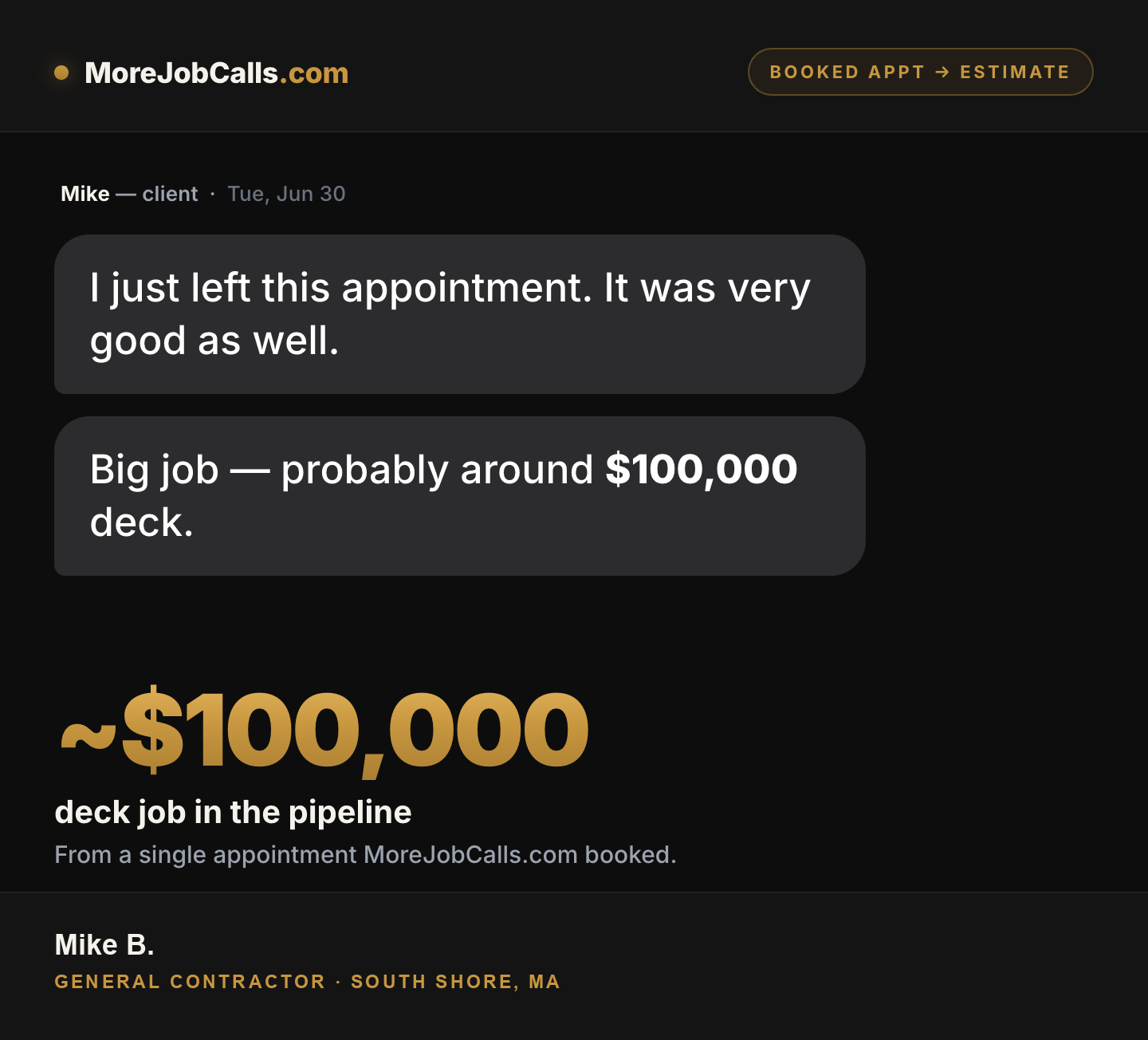
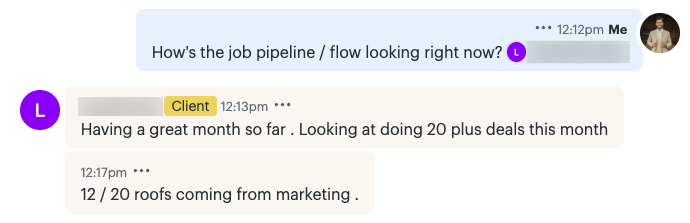
Across the 100+ contractor businesses I've worked with, a few patterns hold in every trade that sells a big ticket at the kitchen table.
- The phone is the leak nobody measures. Owners spend real money on marketing, then send the calls to a voicemail box.
- The replacement buyer is reachable early. The companies that wait for the breakdown compete on speed and price. The ones that show up first compete on trust.
- Both spouses at the table changes the close. Booking for it is cheap, and skipping it is expensive.
- Follow-up wins more replacements than the first visit. The estimate is the start of the sale, not the end.

Common Questions
What is the best marketing for HVAC companies?
The best HVAC marketing does two jobs separately. For service calls, be easy to find and answer every call fast. For replacements, reach homeowners with aging systems before the system fails, qualify them before booking, and follow up after the estimate. Most HVAC marketing only does the first job.
How much should an HVAC company spend on marketing?
Work backwards from a signed job. Decide what you can afford to spend to win one replacement, then measure what each channel actually costs per signed job. A budget set as a percentage of revenue tells you nothing about whether the money is working.
Should an HVAC company use Google Ads or social ads?
Google search catches homeowners who already need help, which suits emergency service. Social ads reach homeowners before their system fails, which suits planned replacements. Most HVAC companies that sell replacements need both, aimed at different jobs.
Does SEO work for HVAC companies?
Yes, but slowly. Google Business Profile and review work can move map rankings within weeks, while website pages usually take 6 to 12 months to compound. It's a long-term asset that pays off most when something else is already filling the calendar.
How do I get more HVAC replacement jobs in spring and fall?
Run replacement campaigns in the shoulder seasons instead of waiting for the weather. Start with maintenance customers whose heat pump or air conditioner is past ENERGY STAR's 10-year mark.
Where to Start
Start with the phone and the reviews this week, because they're cheap and they move fastest. If you'd rather hand the replacement side off, our HVAC appointment system books it onto your calendar.
And the next time the phone goes quiet in April, don't check whether it's plugged in. Check whether anyone's marketing the replacement.